83% of UK motorists back zero alcohol limit for new drivers
Zero alcohol tolerance, legally required P-plates and passenger restrictions among the top measures motorists back to reduce risk for newly qualified drivers

Around one in five people killed or seriously injured on Britain's roads in 2025 were involved in a crash involving a young driver.
And young male drivers are 4 times as likely to be killed or seriously injured, compared with those aged 25 and over(1)
With Graduated Driving Licences coming into effect in Northern Ireland in October, almost 2 in 3 (64%) UK drivers would like to see this extended to the UK
Lack of experience and increased risk of claims pushes young driver premiums as high as £2,042, on average(2)
Confused.com has partnered with Protect Young Drivers to help improve young driver safety through greater education, awareness and evidence-led action
UK motorists are calling for better measures to protect newly qualified drivers and improve road safety, new research reveals. That’s as Northern Ireland prepares to introduce Graduated Driving Licences (GDLs) this October(3), and the Department for Transport (DfT) considers a zero drink-drive limit for new drivers(4).
A survey of 2,000 UK drivers found that many would like to see enhanced rules applied to drivers who have recently passed their driving test, as young drivers in particular are statistically more likely to crash in their first year of driving.
According to the research, more than 4 in 5 (83%) believe that a zero alcohol tolerance should apply to new drivers. This comes as the Department for Transport (DfT) considers lowering the drink-drive limit as part of its 2026 Road Safety Strategy.
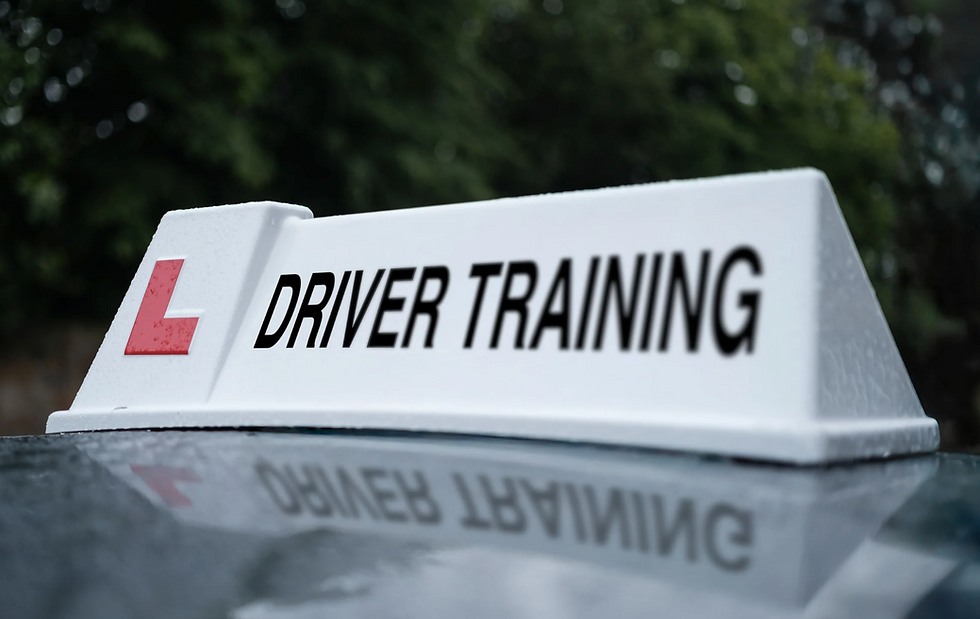
Almost 3 in 4 (72%) also believe that P plates should be a legal requirement for those who have recently passed their test - a measure to alert other road users that someone may be less confident or have less experience.
Many also believe that newly qualified drivers should be using telematics, or black box, policies after passing. For just over half (55%) this is something that should be enforced for new drivers. Telematics policies track a driver's behaviour behind the wheel, including speed, braking, acceleration, cornering and the time of day they're driving. This data is fed back to the insurer and means premiums can be based on how safely someone actually drives, rather than assumptions tied to their age or lack of experience. Telematics can also give new drivers direct feedback to help them build safer habits early on.
Interestingly, drivers also feel that limiting the number of passengers travelling with new drivers could help to improve road safety. That’s as almost half (47%) think travelling with more than one passenger should be banned. And just over 1 in 4 (26%) think travelling with passengers altogether should be banned.
Top voted measures applied to newly qualified drivers
Measure | % of UK drivers in favour |
Zero alcohol tolerance | 83% |
No phone calls while driving (inc. hands-free) | 80% |
Legally required P plates | 72% |
Telematics (black box) monitoring | 55% |
Not allowed with more than one passenger | 47% |
Stricter penalties for offences | 46% |
Lower penalty points threshold | 44% |
Night curfew | 36% |
Hours-per-day limit | 33% |
Not allowed to drive on motorways | 28% |
Not allowed to drive with any passengers | 26% |
Not allowed to drive alone | 23% |
According to the research, drivers feel these measures should be in place for 11 months after passing their test, on average. Although almost 1 in 4 (23%) think they should last as long as 2 years.
Currently, rules are a lot stricter for new drivers(6) which lowers the tolerance for bad driving behaviours. If a new driver accumulates 6 or more penalty points in their first 2 years of driving, their licence is automatically revoked without discretion. They would then need to reapply for a provisional license and retake both their theory and practical test. This is much stricter than the standard rule for full licence holders, which is disqualification after 12 points within 3 years.
These rules are in place to arguably encourage safer driving habits while new drivers build up their experience and confidence behind the wheel. And it’s not unjustified, as data shows that young drivers are at greater risk of being involved in serious collisions.
According to data from the Department for Transport (DfT), young male car drivers aged 17 to 24 are 4 times as likely to be killed or seriously injured compared with all car drivers aged 25 or over(1). And in 2025, around a fifth of all killed or seriously injured (KSI) casualties from collisions involving cars were in collisions which involved a young car driver.
The emotional impact of serious or fatal collisions is unmeasurable, and many families regularly campaign for better regulations to educate young drivers, or limit their exposure to difficult road conditions. And this has led to many discussions around the introduction of Graduated Driving Licences (GDLs), which is being introduced in Northern Ireland in October 2026(3).
Graduated Driving Licences recognise that learning doesn't end when someone passes their driving test. They provide a structured transition to independent driving, giving young drivers the time and support to build experience, confidence and judgement during the period when they are at greatest risk. As part of this approach, GDLs typically include temporary measures, such as limiting late-night driving or carrying multiple peer passengers, before full driving privileges are introduced.
The UK Government has said it is not considering the introduction of a GDL system However, almost 2 in 3 (64%) UK drivers are calling for this to be implemented in the UK. That’s as 63% believe that they will have a positive impact on road safety in Northern Ireland.
It’s clear there is a demand for better measures to support young drivers in their transition to regular driving and gaining their freedom, which will ultimately improve their experience, but also the safety of other road users too. To tackle this, Confused.com has launched a partnership with Protect Young Drivers to strengthen understanding of the risks facing newly qualified drivers and support measures to better protect them on the road.
The partnership will bring together many years of expertise from across the road safety and insurance industries to deliver data-driven education for drivers and those who influence road safety policy. It will also support informed discussion about how policy and licensing approaches can better protect young drivers.
Better road safety measures will, in turn, improve road safety for all motorists. Lower risk of crashes can have a positive knock-on effect on car insurance premiums, which are primarily calculated on the risk of a driver making a claim. Young drivers in particular bear the brunt of high premiums, as the latest Confused.com car insurance price index shows that premiums are as high as £2,042 for young drivers(2), on average. And the data shows prices remain in the thousands for drivers, until they reach 30 years of age. This could be a reflection of drivers proving their driving history through no claims, and building up their driving experience to lower their risk of an incident.
While statistically younger drivers will likely always pose a higher risk than those with more experience, lowering their risk through measures such as GDLs, or better uptake of telematics (black box) policies could help ease the burden of high insurance prices.
Commenting on the partnership, Steve Dukes, CEO at Confused.com says, “When it comes to insurance, the question we get asked a lot is ‘why are young drivers paying so much for their insurance’. It’s a real pain point for them, as they are desperate for their freedom, but have to foot hefty insurance costs to get there. And the truth is that young drivers are statistically at a higher risk of an incident, compared to other age groups.
“The insurance industry is under pressure to do better and help bring costs down, especially for younger drivers. But the answer fundamentally lies in improving road safety, and reducing risk. This is a priority when it comes to helping young drivers feel safe and confident on the road.
“We’re looking forward to working with Protect Young Drivers to push for change and save lives. Young drivers look to us to help them save money on their insurance - but together, the support we can offer them goes beyond just saving them money, and can help them to become safer on the roads too.”
Rebecca Morris, Engagement Director, Protect Young Drivers, adds, “We are delighted to be working with Confused.com to strengthen understanding of the risks young drivers face in their first months on the road. Young drivers experience a unique combination of inexperience and exposure to higher-risk situations, and Protect Young Drivers exists to bring together evidence, insight and real-life experience so that families, professionals and policymakers can better understand those risks and how to reduce them.
“This partnership allows us to combine robust road safety research with industry data, helping to build a clearer picture of the challenges young drivers face. By improving understanding and supporting informed discussion, we can play a part in creating safer conditions for young people as they gain independence and experience behind the wheel.”
ENDS
Unless otherwise stated, research carried out by One Poll on behalf of RVU of 2,000 UK drivers between 10 and 15 June 2026.
Reported road casualties in Great Britain: younger driver factsheet, 2025 - GOV.UK
Confused.com car insurance price index data, May 2026. Average premium based on 18-year-old drivers
https://www.infrastructure-ni.gov.uk/news/green-light-graduated-driver-licensing-october
https://assets.publishing.service.gov.uk/media/695e2cff8832ab3a48513809/road-safety-strategy.pdf